Alexander Technique
What is it?
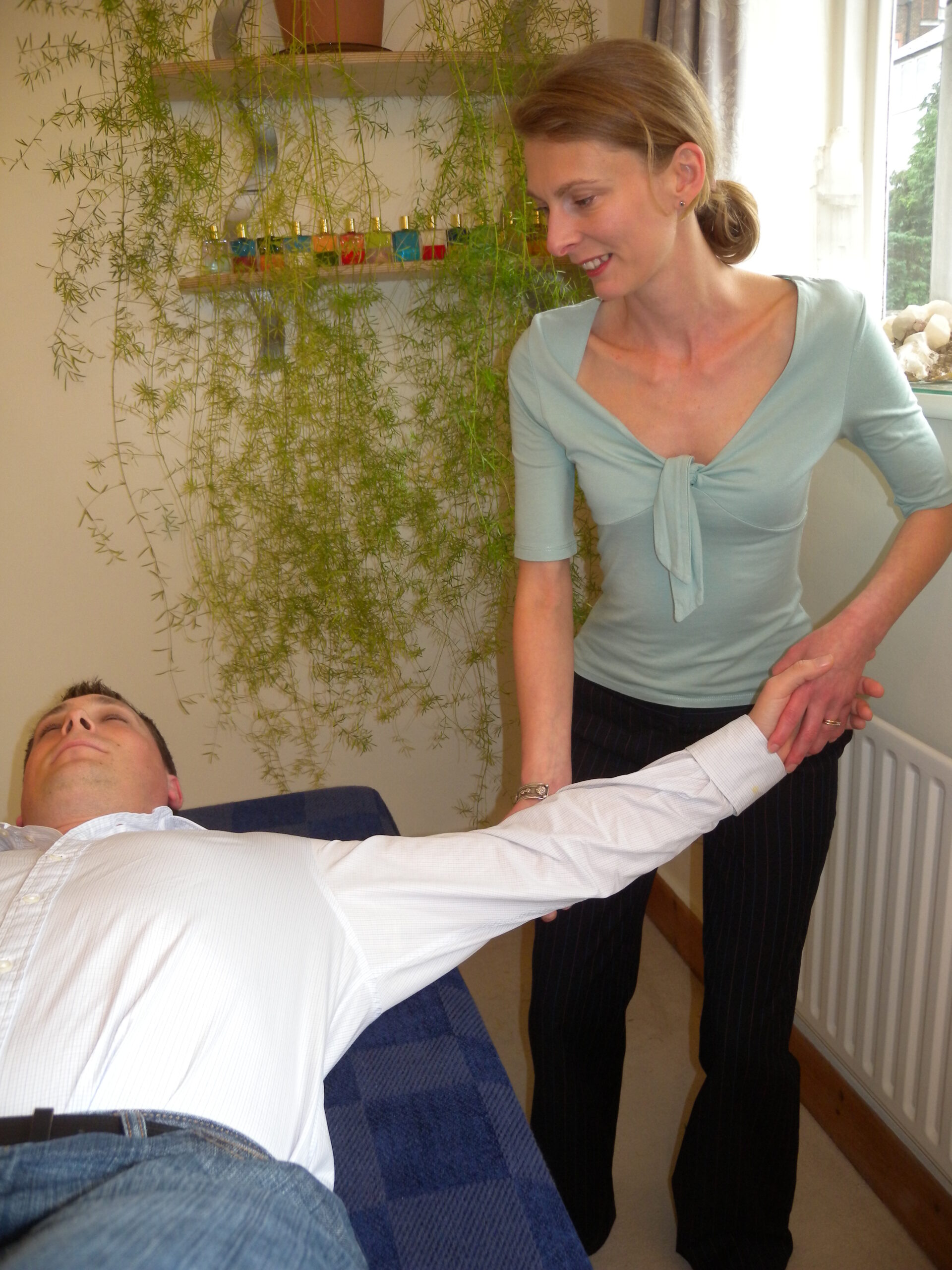
The Alexander Technique is a non-invasive, re-educational technique, with excellent therapeutic benefits. It is a practical way of learning to release unwanted tension and increase supportive tone, so we can move more freely and easily.
In movements such as standing, walking and even sitting we may be distorting the body and interfering with its natural function – learning to consciously control your musculature or, put in simpler terms, learning how to use your body well, is the key. We can be reacting to life by over-tensing or collapsing throughout the structure of our body. This may result in aches, pains, tension, fatigue or simply feeling ill at ease in ones body.
The Alexander Technique is directly concerned with the working of the postural mechanisms, allowing us to become more able to support and balance our body as we go about everyday activities. Postural support is greatly affected by the co-ordination of the head, neck, and back. The Technique works through re-establishing the natural relationship between the head, neck and back. As appropriate tone is re-established in the body there is support for the limbs and a good structural environment for breathing. If these support mechanisms are allowed to work in harmony, good body use returns: freedom of movement, easier breathing, natural poise and good posture follow.
Who is it for?
We all have a body and we all use this body to get ourselves about, most of the time from a point of habit rather than through conscious control. By introducing conscious control of our musculature we are giving ourselves the opportunity to move more freely; to use our body in the best way we can.
If you have an ailment which has been caused by mis-use (badly using the psychophysical organism that is your body), then by improving your body’s use, you will inevitably relieve the ailment.
So in answer to the question “Who is the Alexander Technique for?”, it can be said that it is for anyone who wants to improve the use of their body, whether that is for pain relief, physical performance, general ease of movement or part of an ongoing personal self care programme.
The real value of the Alexander Technique lies in becoming able to apply its principles, by yourself, to your daily activities.
What will you gain?
The Alexander Technique is often used as a pain management skill, to assist those with chronic long-term pain or for rehabilitation after injury (whiplash, sports rehab etc.). However, it’s earliest advocates came for the benefit of learning how to breathe well naturally and to improve the use of their voice. This has made it extremely popular in the performing arts. More recently there has been an explosion of “posture awareness”, resulting in many people coming for lessons or group classes, to help them improve their posture and body awareness. The results are there to be seen amongst those who practice the Alexander Technique, and I would say that now it’s mostly associated with this benefit. If you ask someone who has been practising the Alexander Technique for any length of time, they would generally say that you get stronger in your back, you become both more relaxed and more alert, aches and pains fade, you feel calm, confident and self-reliant, you have more stamina, you think more clearly, you recover from injury more quickly and you cope with stress better.
I would personally add that after many years of practising the Alexander Technique I also feel it can bring me a sense of uplifted emotions, more energy and a deeper understanding of myself.
I feel very fortunate to have found a career in which I am able to facilitate life changing experiences. We are born into our body, a magnificent machine, however we are not given a user manual. The work of FM Alexander is a great user manual. Although he left a great legacy in his work, he had some very harmful and abhorrent views, which I do not share in anyway. I feel it’s important to acknowledge this and see his books as historical text; recognising that his beliefs are not something to bring forward with his work.


